birdlife-white-square-2birdlife-white-square-2birdlife-white-square-2birdlife-white-square-2
  • News
  • Birds
    • Common Coot
    • Common Quail
    • Eastern Imperial Eagle
    • Egyptian Vulture
    • European Bee-Eater
    • Eurasian Blackcap
    • European Honey-buzzard
    • European Roller
    • European Turtle-dove
    • Sociable Lapwing
    • White Stork
  • Countries
    • Europe
      • Albania
      • Austria
      • Bulgaria
      • Croatia
      • Cyprus
      • Greece
      • Hungary
      • Italy
      • Malta
      • Montenegro
      • Portugal
      • Serbia
      • Slovenia
      • Türkiye
    • Asia
      • Lebanon
      • Türkiye
    • Africa
      • Egypt
      • Kenya
      • Morocco
      • Zambia
  • Threats
    • Illegal shooting
    • Illegal wild bird trade
    • Nest robbery
    • Poisoning
    • Bird trapping
  • Our Mission
  • Migration
  • About
    • We are Birdlife
    • Our projects
  • IKB Newsletter
✕

Feliks is free again!

August 19, 2026
Categories
  • Uncategorized
Tags
  • bird migration
  • Bird Protection and Study Society of Serbia

The Eastern Imperial Eagle, Feliks, returned to his homeland on a Serbian military plane on July 22nd and became famous worldwide. In his short life, the young eagle has already lived through quite a bit of turmoil. Last year, the bird took off from Serbia and flew all the way to Syria, where he was kidnapped by poachers who demanded a ransom, which was refused. Fortunately, the eagle was rescued by the Lebanese Association for Migratory Birds (LAMB), where it spent more than half a year in a shelter in northern Lebanon. Eventually, negotiations and efforts to move the bird out of the war-torn country were successful.

Upon his return to Serbia, Feliks was placed in a sanctuary for protected wild species within the Palić Zoo. He received special attention and care from an experienced team of veterinarians, biologists, and other professionals who help recover and return hundreds of wild animals to the wild.
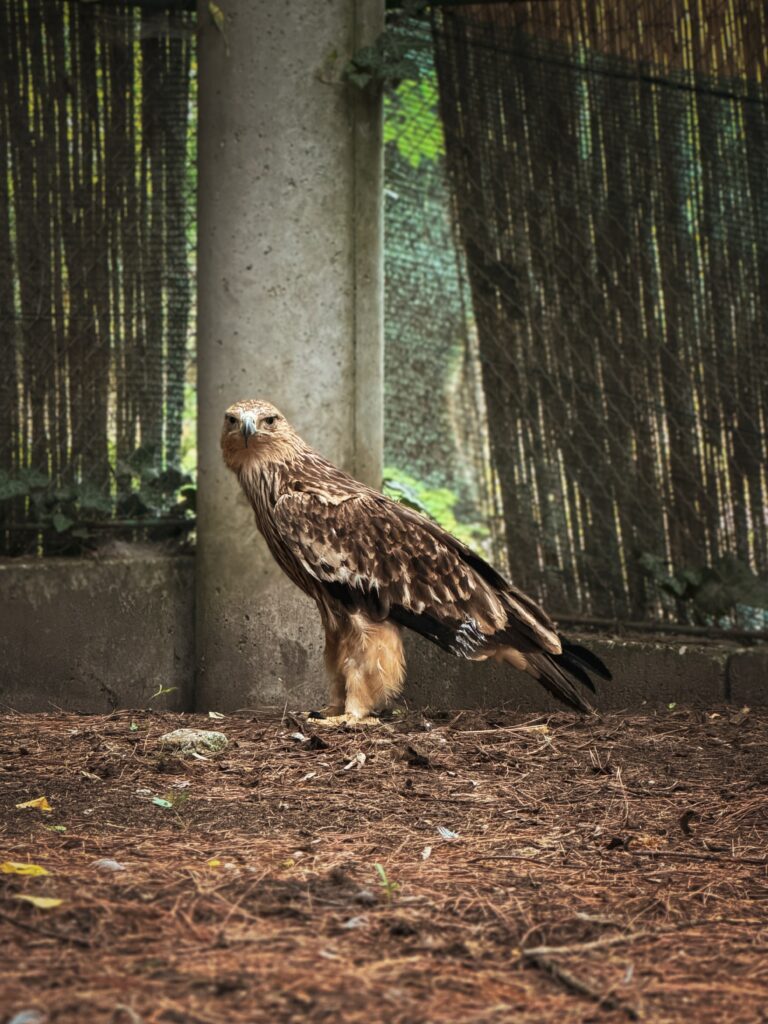
Feliks at a wildlife sanctuary in Serbia, photo by Palić Zoo

“Feliks arrived at the zoo’s shelter exhausted, after a long and demanding transport by a military plane. In the first days, the biggest concern was whether he would accept food and how he would react. His state of health, condition and behaviour were monitored daily and the caretakers offered him different food in order to find out what he likes best,” says Sonja Mandić, director of the Palić Zoo.

After more than a month of supervision, feeding, and flight training in a spacious aviary, Feliks gained enough strength to return to the wild. Before his takeoff, he went through a final examination during which he received new foot rings for identification and also had a lightweight telemetry device fitted to his back. Thanks to this device, ornithologists were able to follow Feliks’ flight to the Middle East in the past.

After all the preparations, Feliks was finally freed on the 6th of August in the territory of a protected area near Subotica. Within a few days, he already made his way to the Slovakian-Polish border, showing that he had regained his strength.
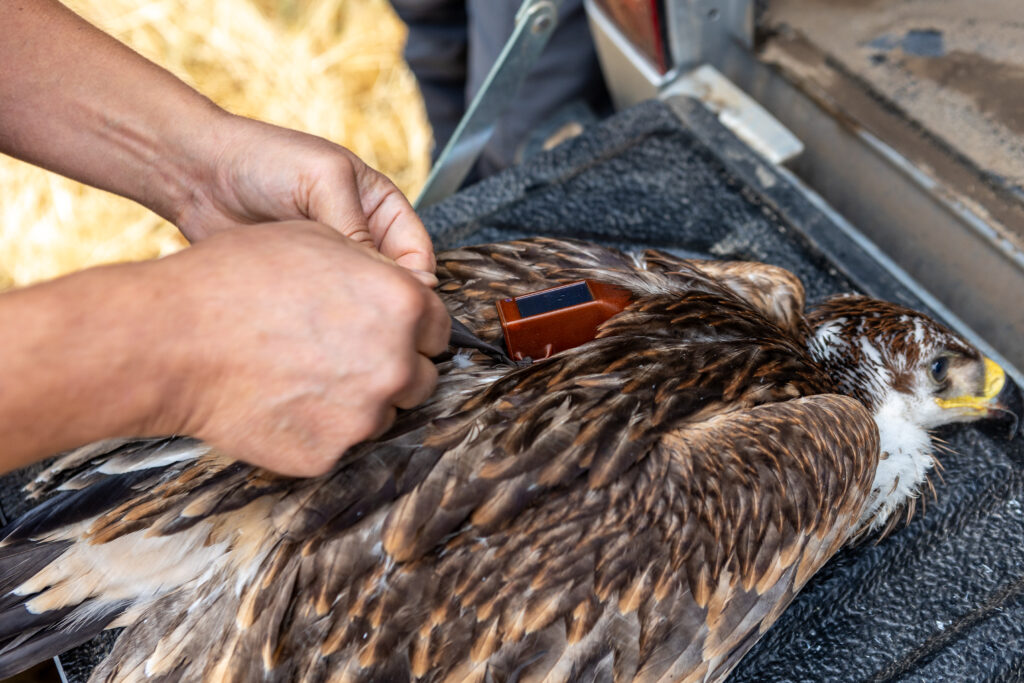
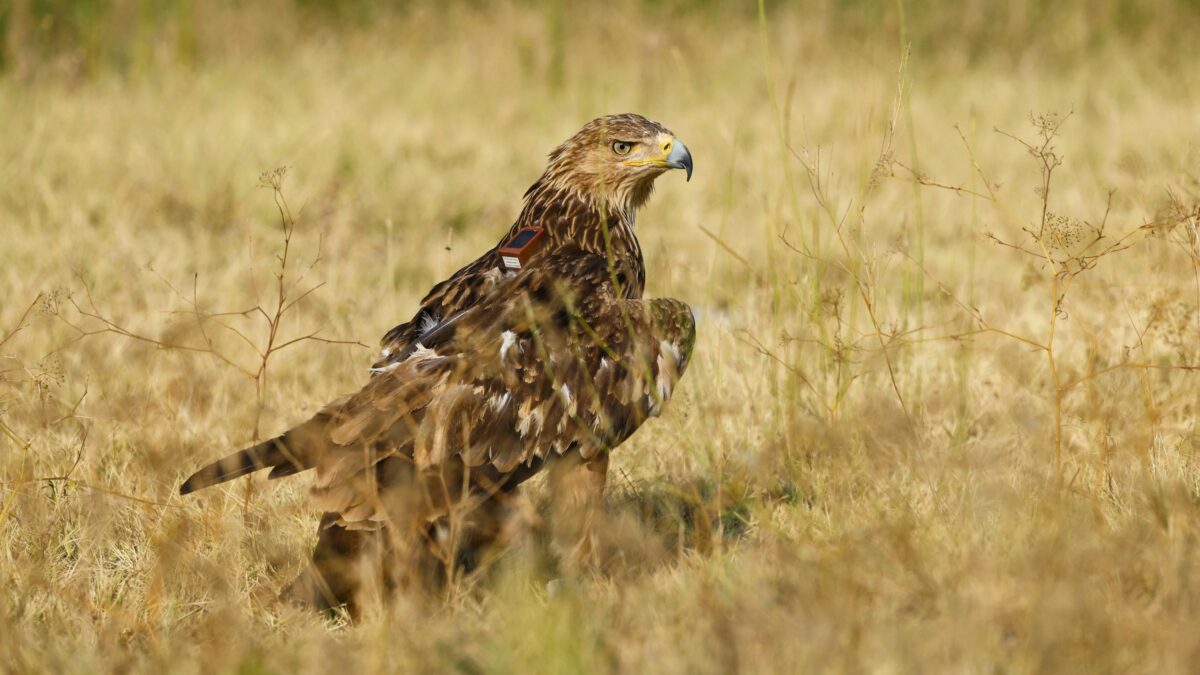
Feliks’ First tagging in 2025, when he was a juvenile, photo by Damir Trnovac

The complex and lengthy rescue operation showed that international cooperation is necessary and that people have a responsibility to protect and conserve species worldwide, especially endangered species like the Eastern Imperial Eagle. 29 breeding pairs have been recorded in Serbia this year, which is the result of a 10-year recovery program and the implementation of active protection measures.

“We are proud of everything that has been done so that Feliks can be free again in nature. We have shown that with the cooperation of various individuals, activists, associations, institutions, and companies, it is possible to carry out even the most complex endeavours. Even the release of a bird that was poached and imprisoned in a country where war operations are ongoing,” adds Milan Ružić, executive director of the Bird Protection and Study Society of Serbia (BPSSS).

Feliks is a symbol of international cooperation for the protection of birds. But his story also shows that nature knows no borders and that we need to work hand in hand to protect the birds we love.
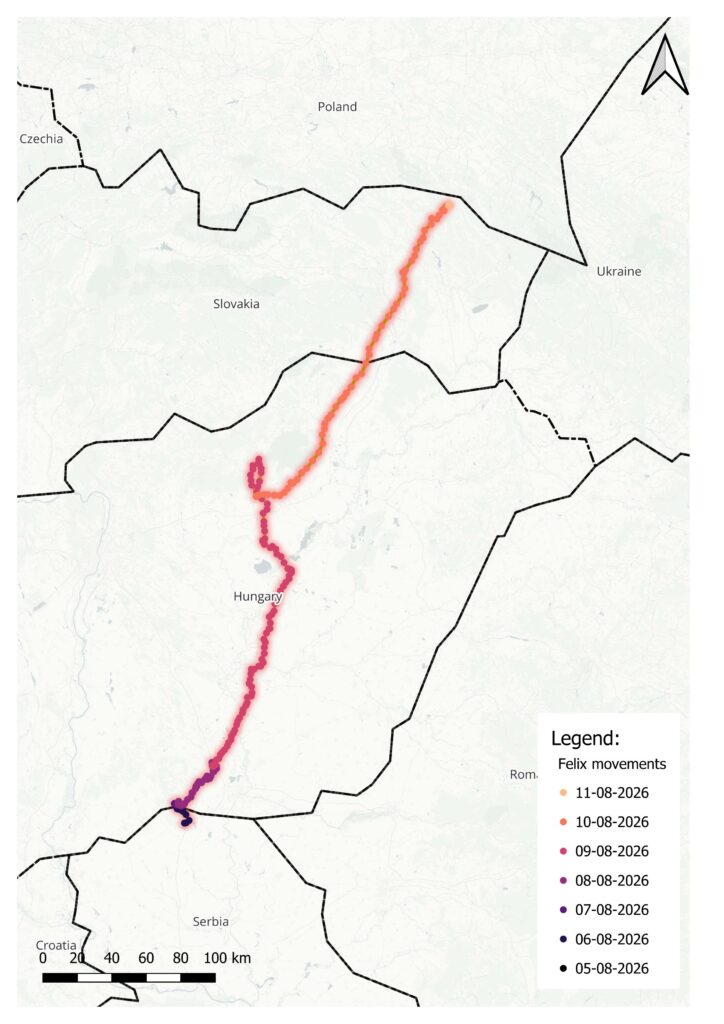
Feliks’ first flight after the release into the wild
bird migrationBird Protection and Study Society of Serbia
Share

Related posts

April 22, 2026

Science and solidarity: BirdLife International at CMS COP15


Read more
December 17, 2024

Serbia fails to save quails  


Read more

2008234286

July 18, 2024

A brighter future for the European Turtle-dove?


Read more
Stichting BirdLife Europe and BirdLife International gratefully acknowledge financial support from the MAVA Foundation, the EU LIFE programme, the European Commission and Vogelbescherming Nederland (BirdLife Netherlands).
All content and opinions expressed on these pages are solely those of Stichting BirdLife Europe.
"Flight for Survival" is partially funded by the LIFE Against Bird Crime project. More information is available here.

Over 25 000 000 million birds are illegally killed around the Mediterranean, Northern Europe and the Caucasus every year. For non-rounded, mean numbers, and minimum/maximum estimates, see: Preliminary assessment of the scope and scale of illegal killing and taking of birds in the Mediterranean (Brochet et al 2016) and Illegal killing and taking of Birds in Europe outside the Mediterranean: assessing the scope and scale of a complex issue (Brochet et al., 2018)

“Flight for Survival” is a BirdLife International campaign managed by Stichting BirdLife Europe to raise awareness about the illegal killing of birds in Italy, Croatia, Cyprus, Greece, Egypt, Lebanon, Bulgaria and Hungary, and their conservation activities to fight this.” The species storylines for this campaign are heavily inspired by the information available on the migration habits of the selected birds.

  • Privacy policy
  • About us
  • Cookies policy
  • Contact us
Stichting BirdLife Europe (SBE) manages the European and Central Asian division of BirdLife International. This website is provided by SBE for the BirdLife International Secretariat. SBE and BirdLife UK are joint data controllers for your personal information.
© 2019 Stichting BirdLife Europe - Flight for Survival. All Rights Reserved. Designed by Old-Continent